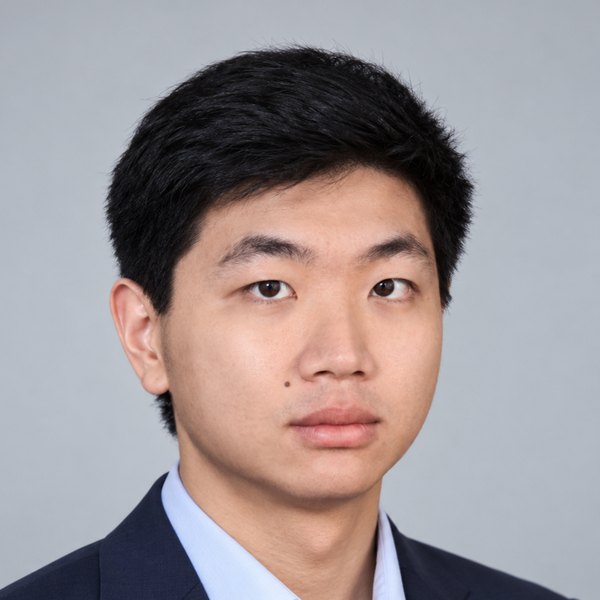
Chief Financial Officer & Chief Operating Officer · Truth Computing
Portfolio Manager · STORE Capital
Kevin Tseng
You are about to put real money into something: the building, the second crew, the machine. And the case for it lives in a spreadsheet nobody else has opened.
Bring the decision you keep putting off, and the last twelve months of your numbers.
Kevin underwrites it. Underwriting means writing down, before any money moves, what the business has to earn for the deal to work and what happens if it earns less. He does it every working day at STORE Capital, across a portfolio of more than 3,500 buildings that other companies operate out of.
He does the same on the software we build for you. What it costs, what it has to save or bring in to pay for itself, and the month that happens. It goes on one page before the work starts, and it gets checked against your books after.
He is also the person who stood Truth Computing up. The corporate and legal setup, the written rule for how money leaves the company, the monthly close, the first design partners. He did that around a full-time job.
What he built at Truth Computing
He built the financial and operating side of this company from nothing, while holding a full-time job.
The company on paper. Truth Computing was an idea before it was a company. Kevin did the part that turns one into the other: the corporate and legal setup, and the paperwork that has to be right before anyone can be invoiced or paid.
A written rule for how money leaves. The company has an expense and invoicing procedure: who approves what, at what amount, and what has to exist on paper before a payment goes out. Kevin owns it: the books, the payments, and the monthly close. The rule that the CFO cannot approve his own spend is in there too.
The first customers. Truth Computing's first design partnerships are with Porsche Ontario and Affordable Family Vision Care. Kevin works the commercial side: what the work costs, what it has to return, and what the company puts in writing.
On top of a full-time job. None of this replaced anything. He is a Portfolio Manager at STORE Capital five days a week. The Truth Computing work happens around it, and has since the beginning.
What he does for you
01
A written case before the money moves
One page, before we build anything: what the work costs, what it has to save or bring in to pay for itself, and the month that happens. You keep the page and hold us to it.
02
Your numbers, not an industry average
The case is built from what you actually bill, pay, and write off. Where a figure is a guess, the page says so and says how big the guess is.
03
The estimate and the date belong to one person
Kevin set up this company's finance and operations and runs them. The person who wrote the estimate is the person who has to hold the delivery date.
How he got here
Kevin studied Economics at the University of California, Los Angeles. The two courses he names from that degree are econometrics and normative ethics. Econometrics is the practice of deciding whether a number in a pile of data means anything or is noise. Normative ethics is the practice of arguing about what a person ought to do. A finance job asks both questions in the same afternoon, and most people are only trained for one of them. He has kept both in the same job ever since.
He met Mark at UCLA in 2019, their freshman year. They have worked together since.
Out of UCLA he went into investment banking. His clients built and supplied things for the military and for government agencies: aerospace, defense, and government services companies. He advised them on selling the company, buying another one, and raising the money for it. He is now a Portfolio Manager at STORE Capital in Scottsdale, Arizona, which buys the buildings other businesses operate out of and rents them back to them. Its portfolio is more than 3,500 properties, by the company's own published count. His work there is buying, selling, and underwriting.
Underwriting is where the two questions meet. A building is a spreadsheet, and it is also a tenant's actual business, and a number that ignores the second one will be wrong in a way the model never shows you. Doing that day after day is what convinced him the same gap sits under every decision a company makes on data it half-trusts.
So he is building the company that works on it, rather than advising one. At Truth Computing he owns what the company spends and the dates the work is delivered against. He is answerable for the estimate and for the delivery, and there is nobody above him to hand either one to.
How we work
We work on one thing at a time, every week, until it is done.
A standing 45-minute session, every week. Same time, same people. You see what was built since the last one. You tell us what is wrong with it. It changes before the next one.
Come with opinions. The session is where the work gets argued about: what it should do, what it keeps getting wrong, what you would try instead. Clients who bring that get software that fits how their business actually runs. Clients who wait for a finished version get a finished version built on our guesses.
The date holds as long as you do. We commit to a delivery date on the first call. We hold it as long as you are in the weekly session. When the sessions stop, the date moves. That is the one condition we ask for, and we ask for it because it is the only one that has ever mattered.
What the first call is. Forty-five minutes. You describe the work you cannot afford to get wrong. We tell you whether we can do it, what it would take, and when it would be done. If the answer is no, you get that on the call.
Record
- Present Chief Financial Officer & Chief Operating Officer Truth Computing. Stood up the company's financial and operating foundation: corporate setup, the written expense and invoicing procedure, the monthly close, and the commercial side of the first design partnerships. Owns what the company spends and the dates the work is delivered against.
- Present Portfolio Manager, STORE Capital Scottsdale, Arizona. Buying, selling, and underwriting across a portfolio of more than 3,500 buildings that other businesses operate out of.
- Prior Investment banking Advised aerospace, defense, and government services companies on selling, acquiring, and raising money.
- 2019 Met Mark at UCLA Freshman year. They have worked together since.
- Degree B.A. Economics, University of California, Los Angeles The courses he names from it: econometrics and normative ethics.
How he works
Trust
Where a figure on one of these pages is a guess, the page says so, and says how big the guess is. The calculator above ends with the four costs it leaves out.
Discipline
Truth Computing's spending rule says the CFO cannot approve his own spend. He is the CFO.
Creativity
He took econometrics and normative ethics out of the same degree, and has spent his career putting both questions to the same decision.
Execution
He set the company up, wrote how money moves through it, and holds the delivery dates. The estimate and the date belong to one person.
Exuberance
He does this on top of a full-time job in Scottsdale. Nobody assigned it to him.
Get in touch
Put a number on it
before you commit.
Put time on his calendar, and bring the decision you keep putting off along with the last twelve months of your numbers.